

Menstrual Magic
Blood, Taboo, and the Modern Witch

The Cauldron is a reader-supported publication exploring curious occult history and mythology, with artful nudes from SF-based photographer Jose de los Reyes. See more of his work on Instagram.
You may have heard the news that stem cells found in menstrual fluid could provide treatment for osteoarthritis.
In fact, menstrual fluid might provide cures for a whole host of conditions, from infertility to cutaneous injuries to neurological diseases. Your flow also has the potential to assist with diagnostics for things like cervical cancer and endometriosis, eliminating the need for painful and invasive procedures. Yet menstruating patients are never asked for samples. Seriously, men jerk off into cups in doctors’ offices, but we can’t get a swab of period blood?
Up until the development of modern medical science, menstruation was read as a necessary release of excess blood. Yup. In fact, menstrual “blood” is only half blood—or sometimes even less than half. The rest is made up of endometrial cells, mucus, bacteria, and vaginal secretions.
In the Stone Age (circa 30,000 BCE–3,000 BCE), pads were made of leather or linen-wrapped moss and sand.
Menstruation is, on the one hand, a byproduct of an essential hormonal cycle that regulates the body. On the other, it’s something extraordinary, occurring in only a handful of mammals.
Rather than a passive process, the latest research suggests endometrial shedding contributes to the odds of supporting more viable pregnancies. In other words, decidualization—the dramatic and dare I say magical transformation of the uterine lining—enables the body to select to a certain degree which pregnancies to carry to term, and which to let go.
Yet menstrual flow is under-researched and under-utilized. The reason? It’s “gross.” In other words, menstrual fluid represents the ultimate taboo. A “holy dread.” Hence everybody losing their minds over that scene in Saltburn.
Thank you, Rachel Bloom, for writing a song about period sex.
In pre-Christian cultures, there’s a plethora of myths and tales of menstruation. Here, menstrual fluid is sacred, a gift from the gods, or a punishment. For example, in Mayan myth, menstruation comes from the moon goddess. Her period was a punishment for sex with the sun god. The blood was stored in 13 jars, where it turned into snakes and poison, and was used in potions.
Menstrual fluid is almost always magical and powerful. Because blood is dichotomous; it represents both violence (destruction), and creation (birth). Magic proliferates in the liminal.
Wherever there’s taboo, there’s magic.
Ancient Roman philosopher and Natural History author Pliny the Elder understood menstrual flow was related to reproduction. Yet he described menstrual “flux” as both a useful medical treatment and a source of dark magic that could kill bees, drive dogs mad, draw the Dead Sea, tarnish mirrors, and repel hailstorms. Powerful stuff, indeed!
The ancient Greeks wrapped lint around wood or made rags to absorb their periods.
Ancient Greek society saw women themselves as dirty and inferior. Nevertheless, menstrual effluent was part of some ceremonies and rituals, like the spring festivals, when the blood was scattered over the earth to increase fertility.
In ancient Egypt, menstrual fluid was also used in various potions or healing rituals. (And tampons were made of papyrus and grass.)
The mood darkens as we approach the Middle Ages, where having your period could maybe give you the power to shoot poisonous vapors out of your eyes? Viewed through a Christian lens, with negative Greek influence, menstruation was now firmly a curse, with the story of Eve frequently cited as evidence. This belief was reinforced by church fathers like Augustine and Aquinas who linked menstruation to original sin and women’s inherent moral weakness. So people on their periods were seen as unclean, or even sinful.
Cloths and rags were used as pads in medieval Europe, as well as bog moss.
Published in the late 15th century, the notorious witch-hunting guide the Malleus Maleficarum suggests women are inherently more prone to witchcraft, and that menstruating women are even more susceptible. This popular tome directly contributed to the persecution, torture, and even death of scores of innocent women.
In the Middle Ages, you could attempt to reduce a heavy flow by sporting dried toad powder around your waist.
Nevertheless, during the medieval period, menstrual blood was still a common ingredient in love potions. Some women would add a few drops to the food or drink they were serving their intended beloved/wayward husband. Even today, this is still a widely known spell.
Modern Menstruation
In the Modern Age (15th–19th century), women put cotton and flannel in their bloomers to absorb their menstrual fluid. Eventually a rubber apron that fitted between the body and underwear was added on. All of this was smelly and uncomfortable.
In the 1800s, the menstrual belt appeared, allowing pads of cloth to be attached to the underwear, much like contemporary pads. However, in Europe, these belts were out of reach for lower class women, who just free bled on their clothing. Keep in mind private baths were also not very common in this era.
Kotex pads appeared in 1921. Tampons arrived ten years later. Initially, they’d been used by doctors to staunch bleeding from deep wounds. These products went a long way towards making periods manageable. Concurrently, new research on hormones helped reshape the scientific understanding of the menstrual cycle.
Moreover, the feminist movements of the 1960s and 1970s addressed the menstruation taboo and brought attention to menstrual health. Gloria Steinem published her famed essay “If Men Could Menstruate.”
Current menstrual taboos and restrictions still vary widely by culture. (Read a collection of first-hand testimonies from the NIH.) “Menstruation is a direct, physical, and mental connection to sila—our bodies and minds are a part of the greater environment,” writes Laakkuluk Williamson, who goes on to explain the sila is a sentient force in Inuit ontology. To the Inuit, menstruation is an effect of a natural law dictated by sila, to which we are all subject:
Menstruation is transcustomary. It continues to remind us that we are still here and attuned to the earth despite all the efforts to kill us as Indigenous people. It has not changed because of colonization and still exists despite the imposition of the Gregorian calendar.
In some parts of Ghana, young girls sit under ceremonial umbrellas when they begin menstruating, where they are presented with gifts from family in celebration.
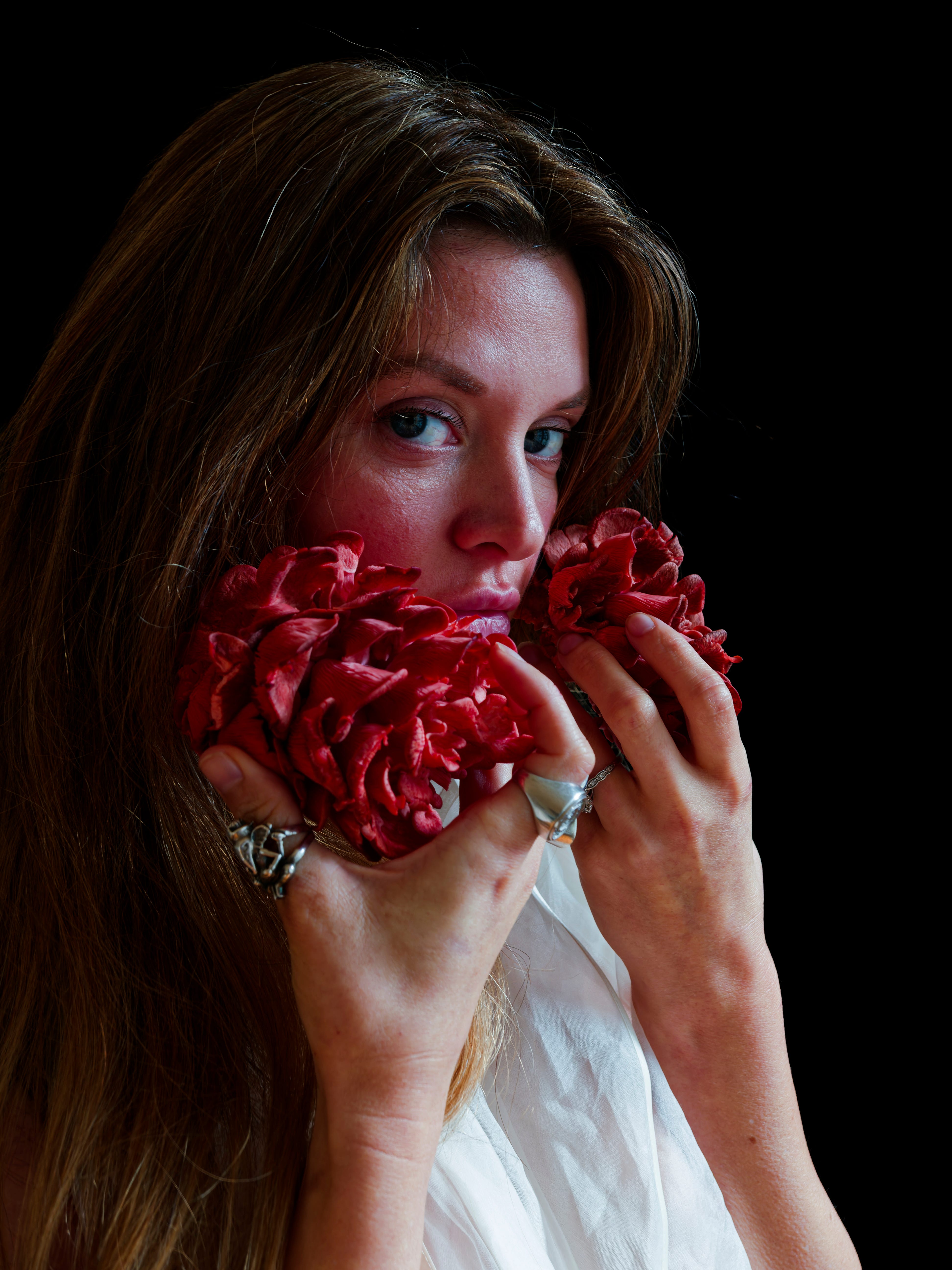
Menstrual Magic
In a how-to piece on menstrual spells in Teen Vogue, Lisa Stardust writes, “Rather than play into this patriarchal shame, witches and other masters of magic believe menstruation is a gift from nature.”
Many modern witches uses menstrual fluid in their spellwork, or to awaken their senses/perceptions. Some scry with it, keep samples on their altar, or ritually offer their blood to the Earth.
And then there’s the Menstrual Art Movement, with artists like Jen Lewis who paint and create with menstrual fluid.
The Future of Flow
What would happen if we let go of the menstrual taboo and freely collected and researched menstrual samples? Through further research, what more might we discover? What secrets might we unlock? And what might all that tell us about the next frontier—menopause?